Your Future Is Not Mine
From October 2025 to January 2026, I did an internship at STT, an organization that
researches the impact of emerging technologies on society. I worked on Horizonscan
2055, a project that broadly investigates the value of emerging technologies for various people, groups and organizations in society. In particular, we consulted people directly impacted by technological change by employing public consultation tools. This
differs from simular projects in the past, which solely focus on consulting experts.
My project serves as an alternative presentation of the research outcomes through
an interactive toolkit. By engaging with physical objects, people interact with the Horizonscan 2055 findings and are encouraged to express their thoughts and ideas.
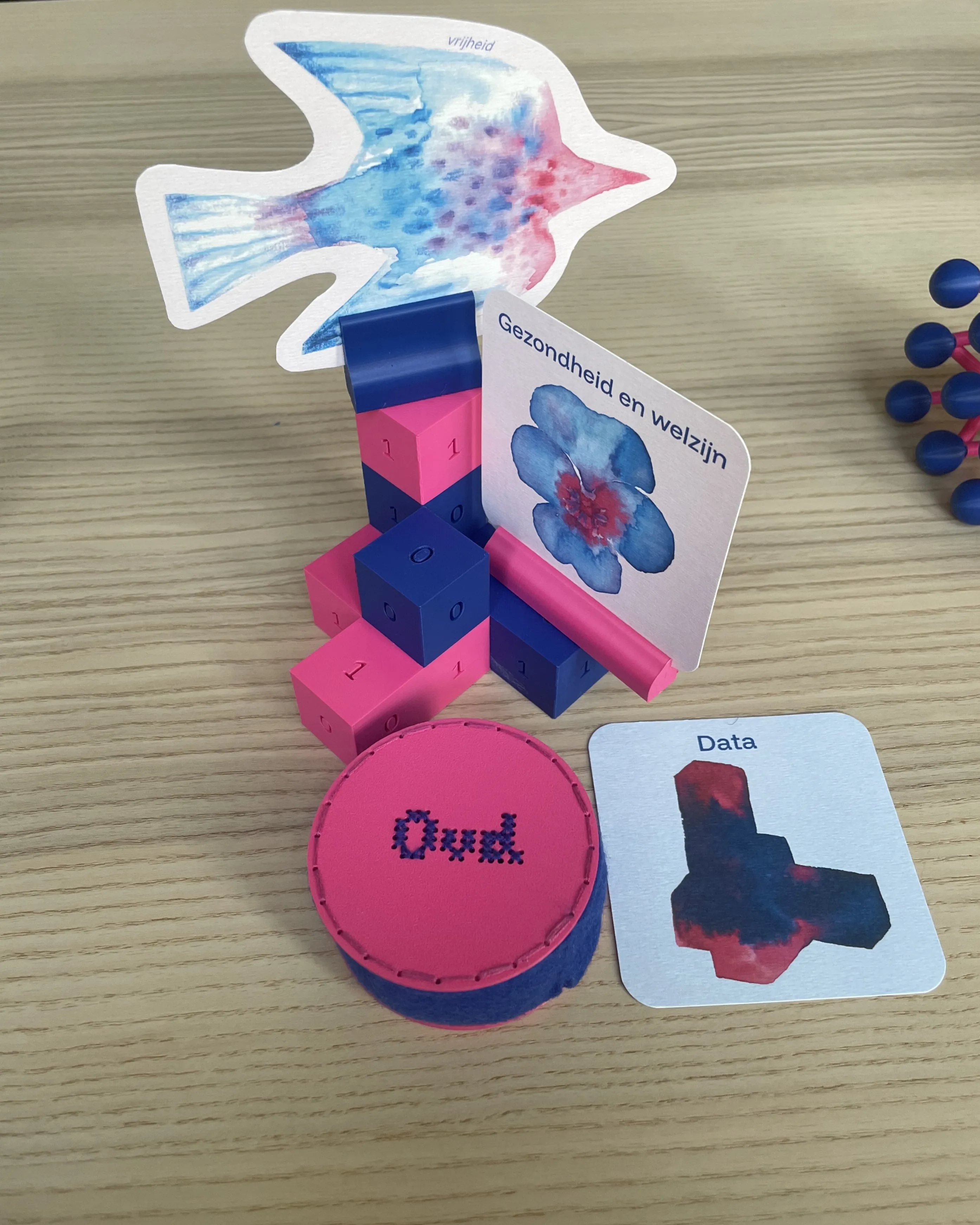
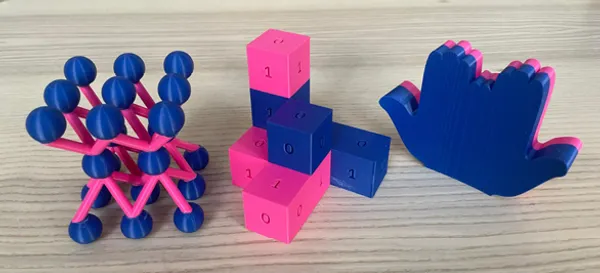
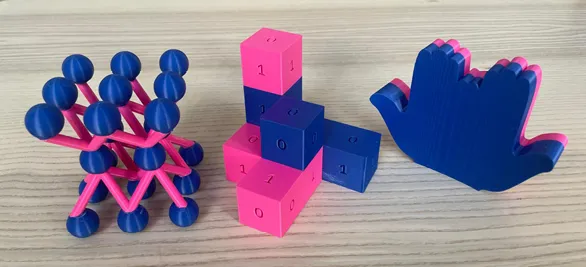
During my internship, I modelled physical representations of complex
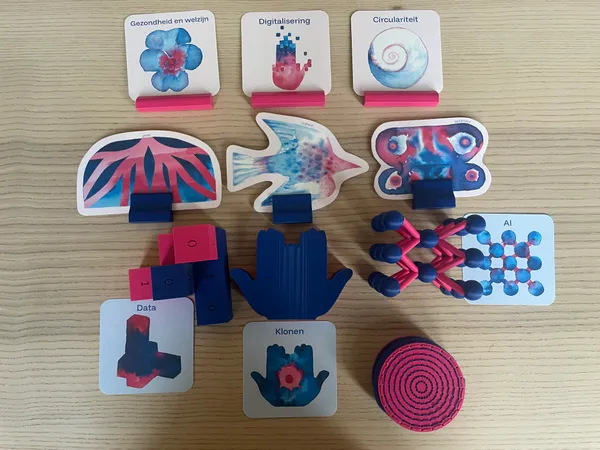
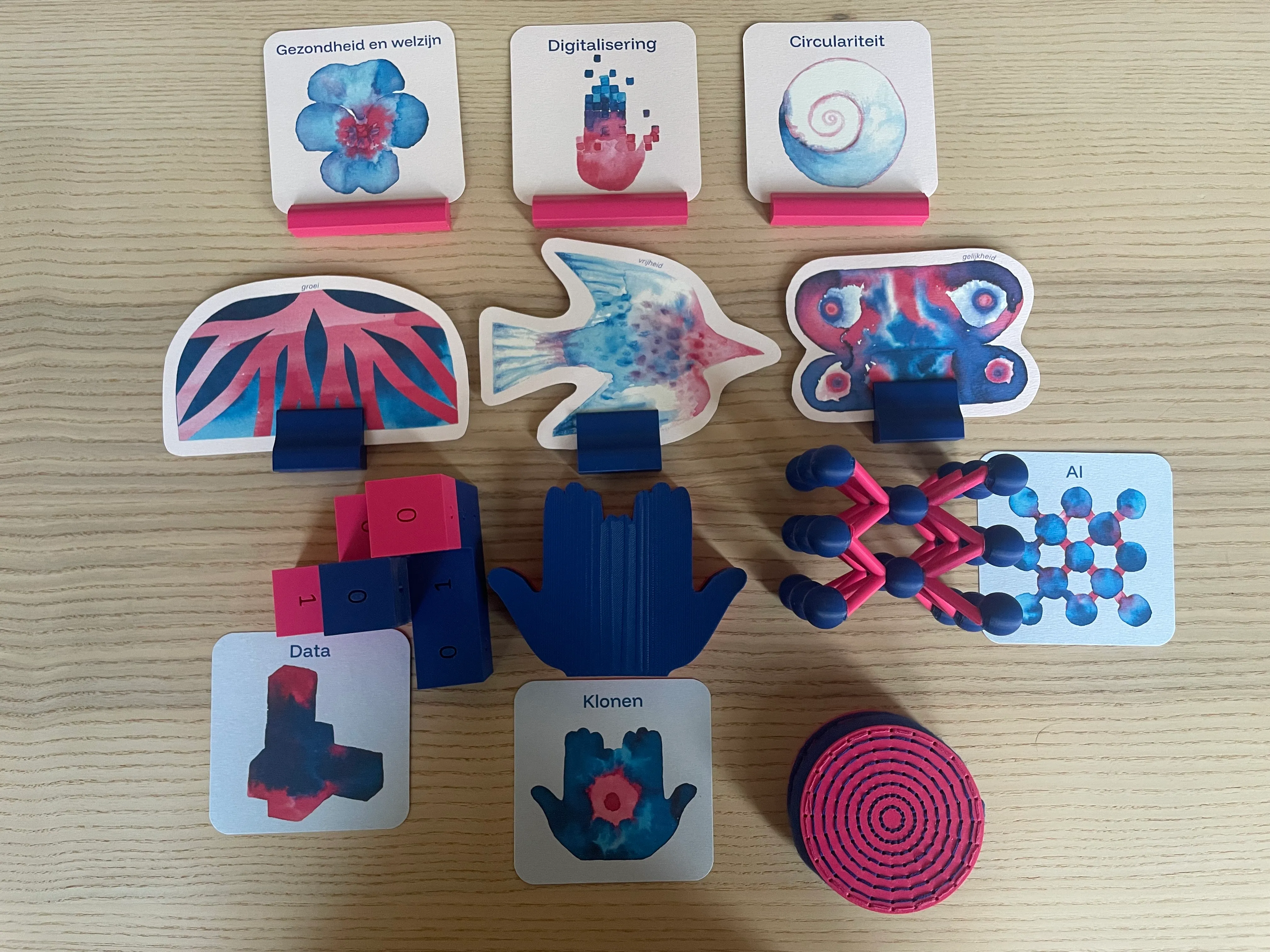
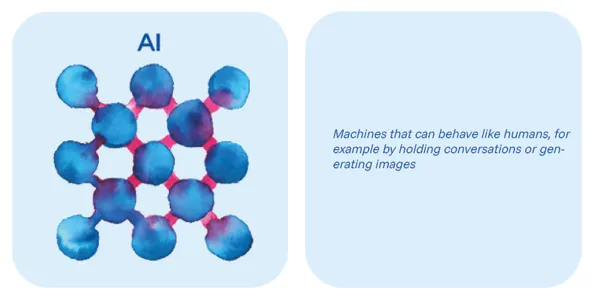
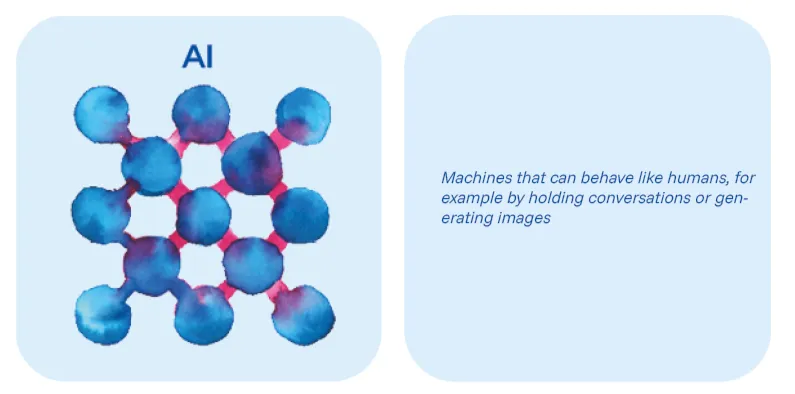
technologies, such as AI and Big Data, to make them tangible and accessible for broad audiences. I paired each piece with a card depicting the
object’s contour and a short explanation of the technology on the back.
I chose 3D printing as a medium because the process itself mirrors the
concept: turning abstract code and mathematics into something physical.
For example, the piece representing AI reflects the layered structure of
neural networks.
To visualize vulnerable groups in society, I used both 3D printing and
textiles, the softness being a metaphor for vulnerability.
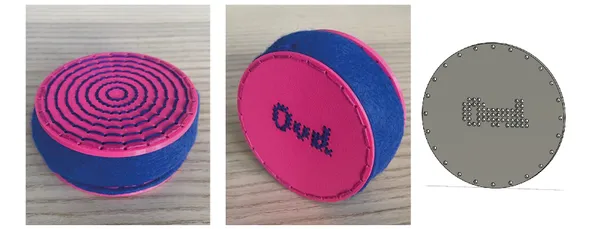
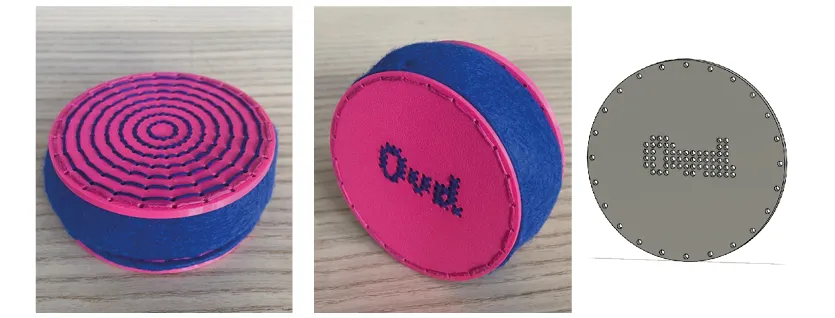
For a piece representing elderly people, I printed disks, which I embroidered and connected with soft felt. I gave the piece the form of a tree
trunk, with growth rings on one side and the word oud, meaning old,
on the other.
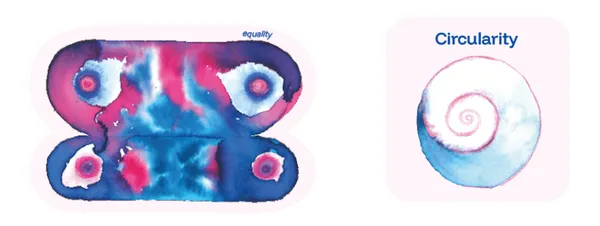
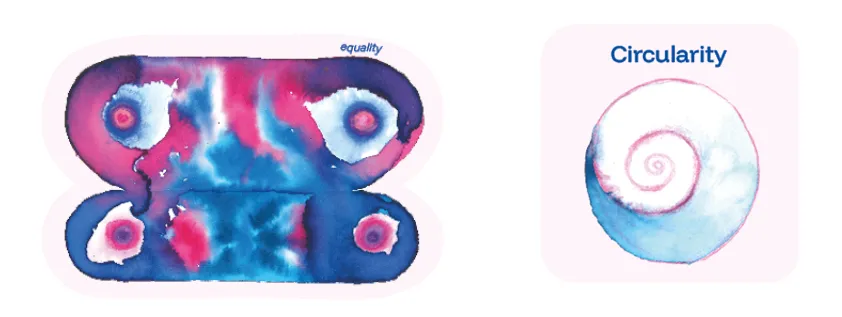
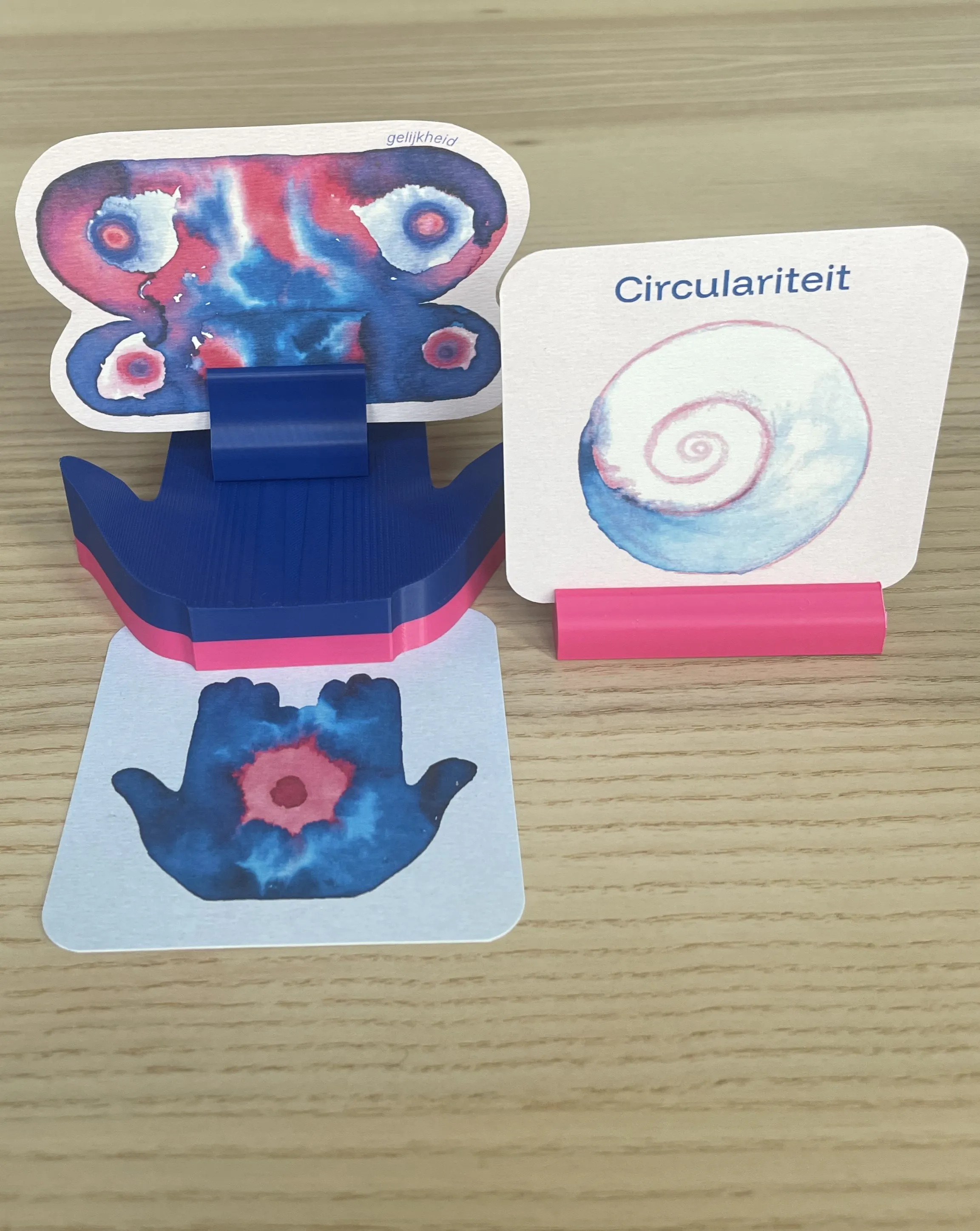
I designed the values and contexts as illustrated cards, held up by 3D-printed stands. I chose abstract, free-flowing shapes to reflect the nature of values themselves: emotional, subjective, and personal. I represented ‘equality’ as a shape that can be read as an equal sign (=) or butterfly wings.